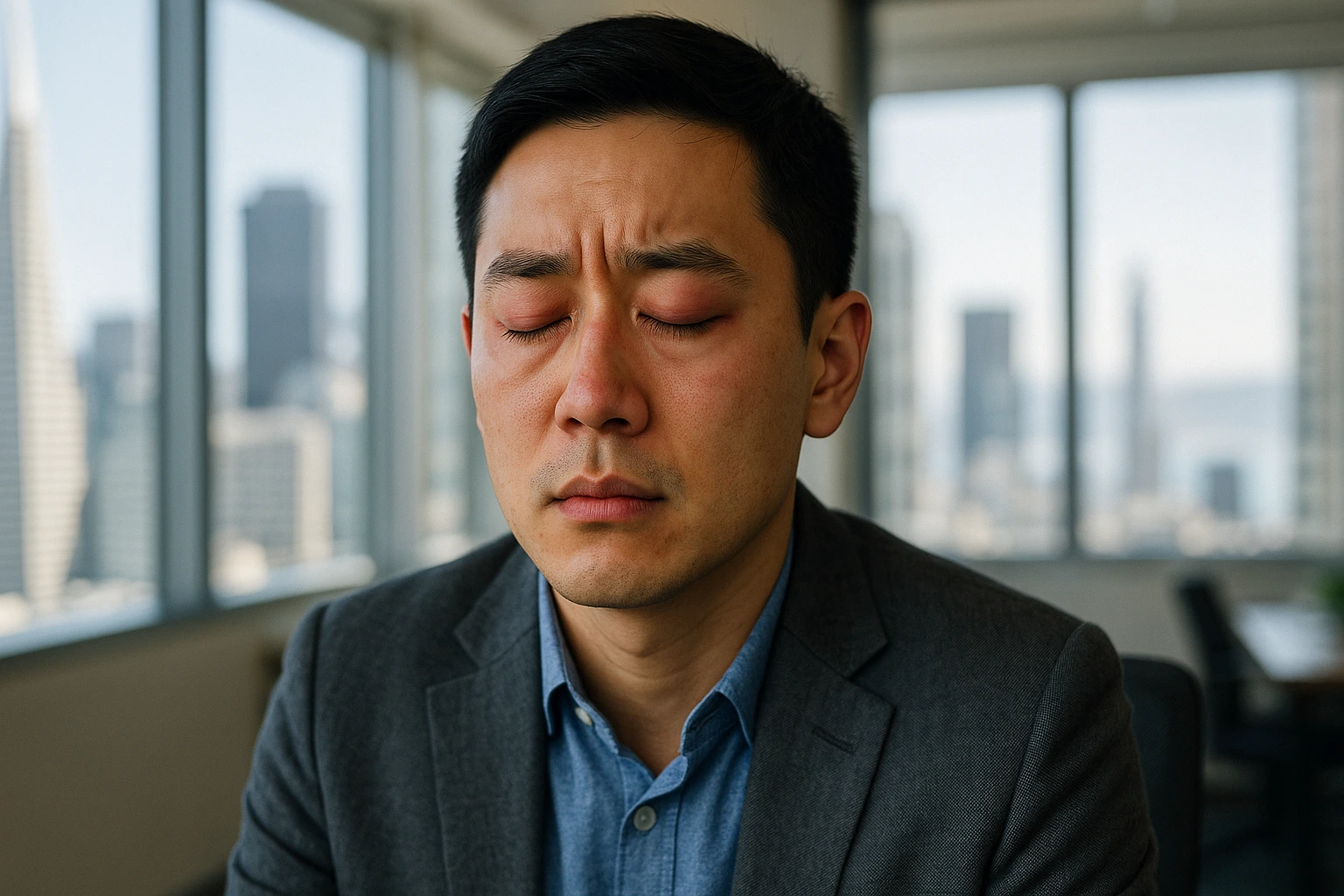
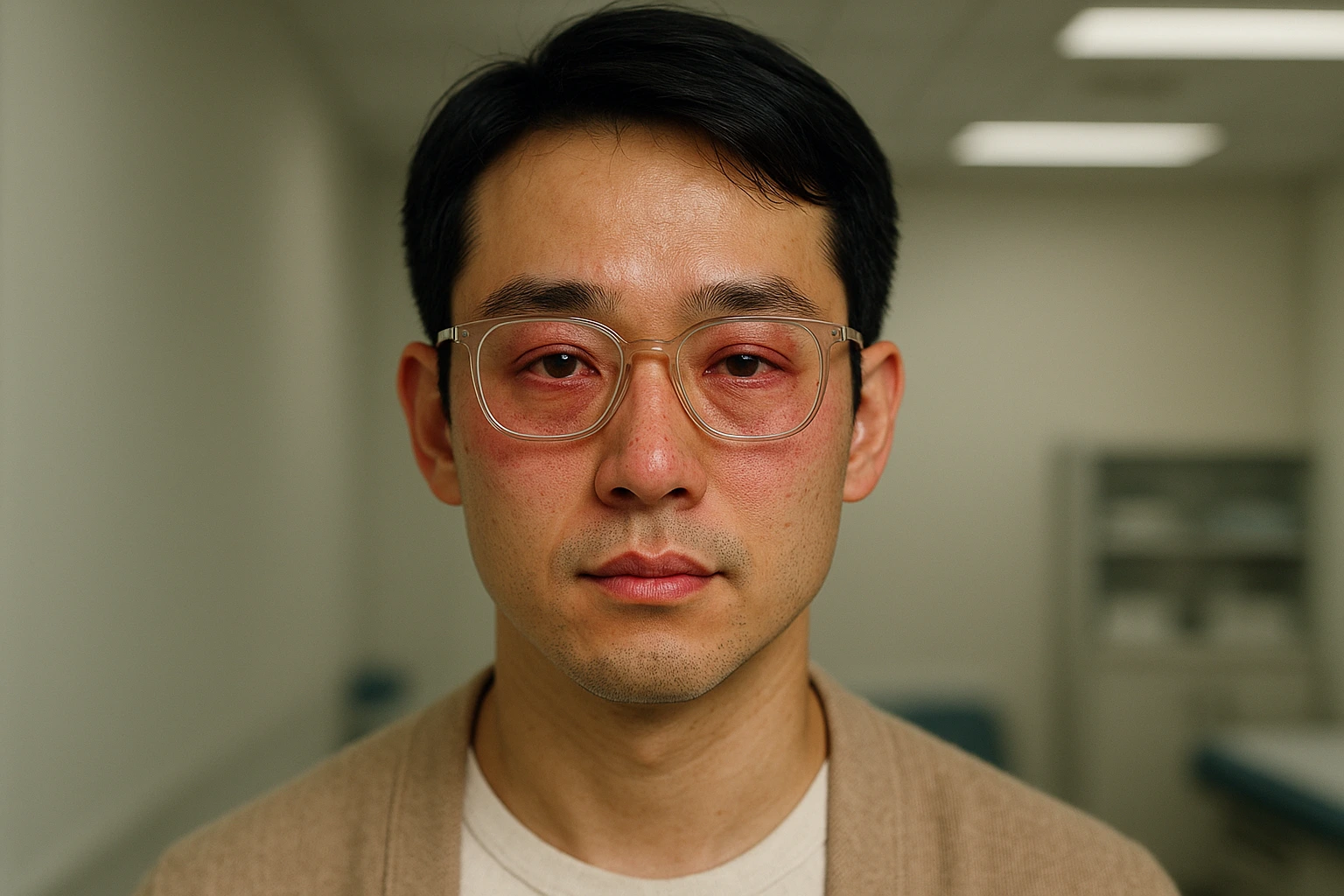
Post-LASIK Eye Discomfort

Persistent pain after refractive surgery (LASIK, PRK, SMILE) is not normal. Our specialized evaluation determines whether your discomfort is due to complex dryness or neuropathic (nerve-related) pain to finally relieve you effectively.
Schedule my assessment
It’s a good place to describe image

You've been waiting for visual freedom, but you're struggling with constant discomfort

Having surgery to improve your vision and ending up with chronic pain is a deeply frustrating experience. Do you recognize these persistent symptoms (beyond 6 months after surgery)?

  • Severe pain, burning, or throbbing that is not relieved by standard drops.
  • Extreme sensitivity to light (severe photophobia), wind, or air conditioning.
  • Difficulty working on a screen or driving at night due to discomfort.

The most frustrating? It's when you're told that the surgery was successful and that your eyes look “normal,” but that your pain is real and disabling. If your discomfort continues, it's time to explore the deeper causes.

Beyond Drops: Diagnosing Complex Dryness and Neuropathic Pain

Differential diagnosis
Finally, understand if your problem is related to tears or nerves (or both).
Validating Your Pain
Get objective recognition of your “invisible” discomfort.
Advanced Targeted Treatments
Access specific solutions for nerve regeneration and neuropathic pain (e.g.: autologous serum, PRGF, regenerative therapies, and other targeted approaches).

Why does the pain persist? The key role of the corneal nerves.
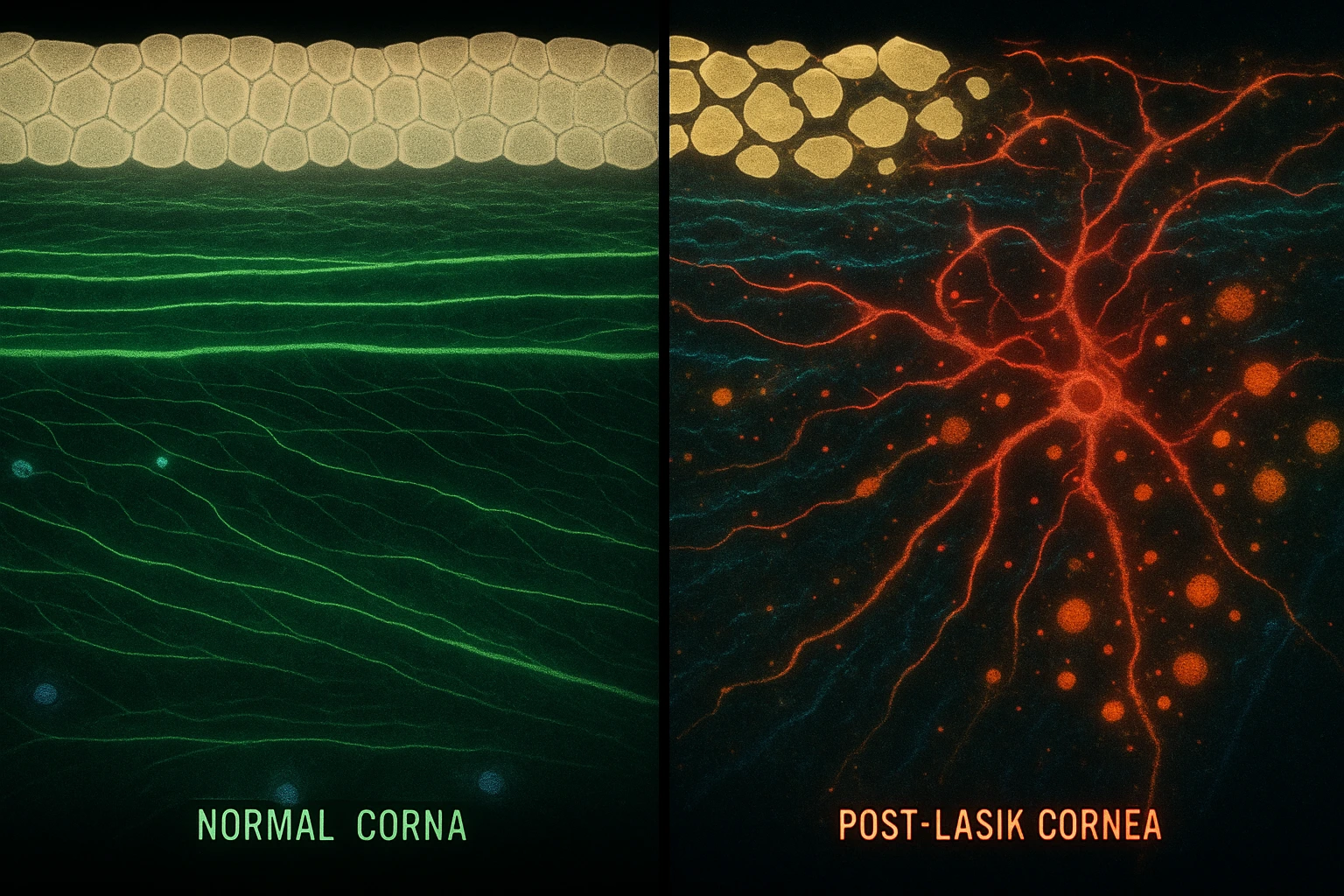
Any refractive surgery temporarily disrupts the microscopic nerves in the eye. These nerves are essential for signaling your brain to produce tears and regulate sensation.

Normally these nerves heal. But sometimes the recovery doesn't go as planned, leading to two distinct problems:

  1. Persistent Dryness (Tears Problem): Consistently nerves reduce tear production, causing complex and severe dryness.
  2. Neuropathic Pain (Nerve Problem):Nerves heal in an aberrant way. They become hypersensitive and send constant pain signals to the brain, even if the eye is not severely dry. This is called “invisible pain.”

The key message: Standard drops cannot correct a nerve signal problem. That's why they often don't work for persistent post-LASIK discomfort.

Histoire de patients

No items found.
No items found.
No items found.
THE CARE EXPERIENCE
Beyond treatments, we offer care rooted in listening and empathy. Each patient is unique, and our greatest satisfaction is restoring the comfort you thought you had lost.
An approach appreciated by our patients. Rated 5.0/5 on Google.

Meet our optometrists

Dre. Francesca Olinga
Optometrist

An optometrist and founder of the CARE Clinic, Dr. Francesca Olinga understands dry eye because she has experienced it. Experienced in the management of complex cases (neuropathic pain, demodex, chalazions), she uses innovation and attentive listening to guide you toward improved eye comfort.

Dr. Trang Nguyen
Optometrist

Optometrist with over 30 years of experience and speaker for eye care professionals. Dr. Nguyen has experience in improving visual quality affected by dry eye. She supports her patients in reconciling their aesthetic goals (makeup, cosmetics) and optimal eye comfort.

A thorough assessment to decipher your discomfort

1

Nerve Sensitivity Analysis

We perform specific tests to assess the function of your corneal nerves and detect signs of hypersensitivity.
2

Advanced Ocular Surface Assessment

Detailed analysis of tear stability and tissue health.
3

Targeted Rehabilitation Plan

Depending on the diagnosis (complex dryness or neuropathic pain), we develop a personalized strategy to restore your comfort.
Two Nimbus Library founders in a minimalist office, showcasing the professional and versatile use of the library.

Nos traitements spécialisés

No items found.
No items found.
No items found.
No items found.
No items found.
No items found.
No items found.
No items found.
FAQ
Isn't post-Lasik dryness supposed to go away after 6 months?

For the majority of patients, yes. If the discomfort persists beyond 6 months, this indicates a complex dryness or neuropathic pain that requires specialized investigation.

Is it permanent?

While the condition may be chronic, it can be managed very well with the right treatments. Our aim is to significantly reduce your pain and restore your quality of life.

I have tried every possible drop and they don't work.

Standard drops treat the lack of tears. If your pain is neuropathic (nerve-related), it requires a different approach that targets nerve function and reducing hypersensitivity, which drops can't do.

My surgeon says my eyes are perfect. Why is it hurting?

This is common with neuropathic pain (“pain with no visible signs”). Nerves can send pain signals even though the structure of the eye seems normal on a standard exam. It's an electrical signal problem, not a visible structure. Our assessment can detect that.