Liquid nitrogen freezes the lesion precisely; the surrounding skin, being less sensitive, heals the area.
Liquid nitrogen cools the skin to about −196°C. The intense cold forms crystals that destroy the lesion's cells. The surrounding healthy skin repairs the area.
Near the eyes, fine-tipped cryoprobe instead of nitrogen spray. Freezing localized to the lesion. Eyeball protected.
No incision or sutures required. A natural scab forms and falls off on its own in 7 to 14 days, usually leaving the skin smooth.


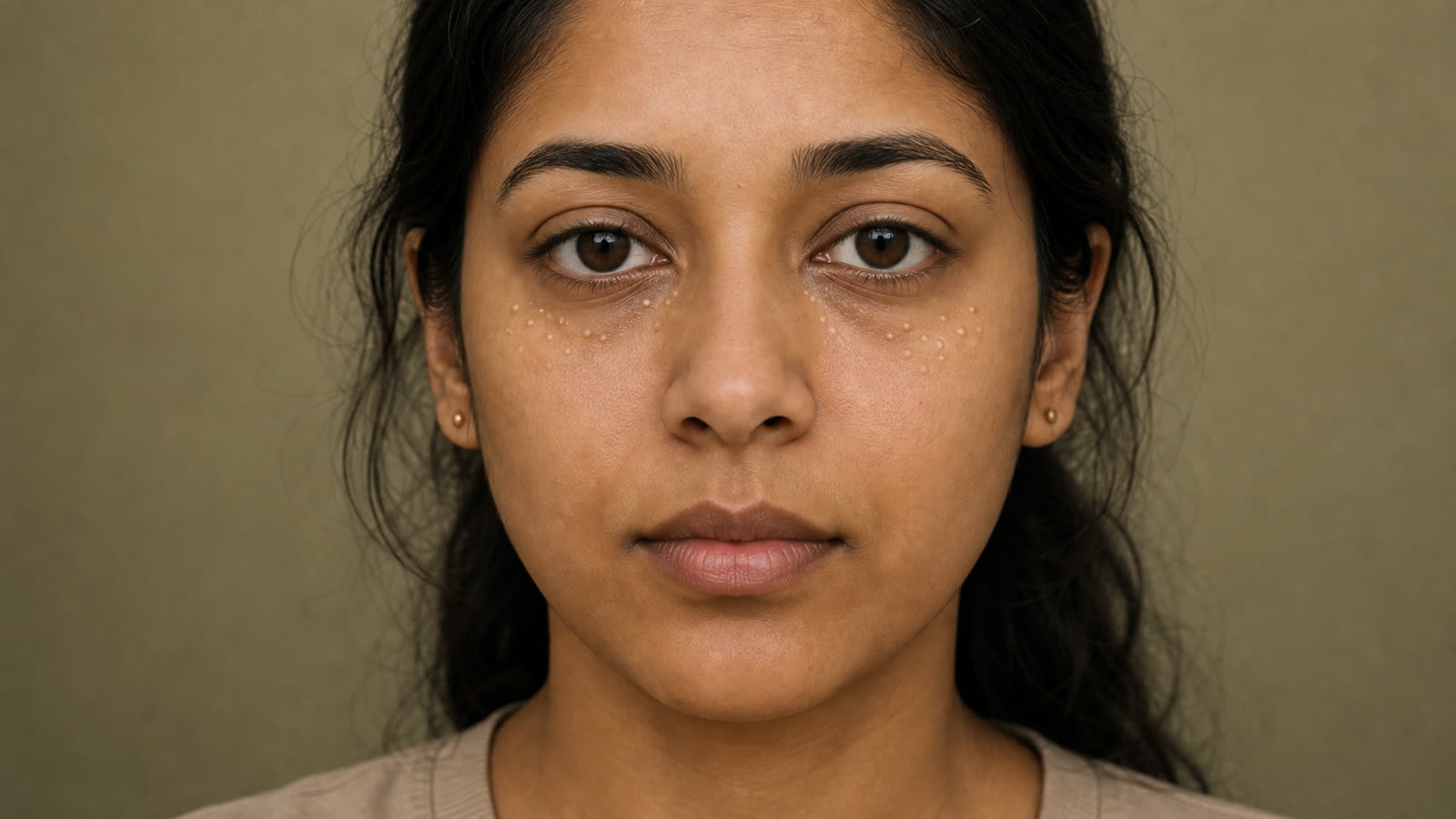
Five types of superficial lesions that the physician can remove in clinic once confirmed as benign.
Small skin growths (skin tags) near the eyelids that become bothersome due to eyeglass friction or heat.
Brown spots caused by sun exposure (solar lentigines) on the eyelids or temples that do not lighten with brightening creams.
Light brown rough patches (seborrheic keratoses) that rub against eyelashes or the frames of eyeglasses.
Small white cysts (milia) under the skin of the eyelids that gentle cleansers do not remove.
Soft yellowish bumps (sebaceous hyperplasia) around the eyes that at-home treatments do not eliminate.
Three situations where cryotherapy is not performed, and three where an alternative treatment is preferred.
Severe Raynaud's disease, cryoglobulinemia, or cold urticaria known.
Active infection on the area to be treated — stye, skin herpes, or open wound.
Lesion that changes rapidly, bleeds, or has irregular borders — referral to a dermatologist before any removal.
Dark skin (skin types IV to VI) — increased risk of permanent lightening of the treated area.
Pregnancy or breastfeeding — aesthetic removal postponed as a precaution.
A brief visit: assessment, liquid nitrogen application, and home care instructions.
The optometrist examines the lesion and confirms it is benign. He rules out cold contraindications and explains the plan. Numbing cream 30 min beforehand if the area is sensitive.
The optometrist applies liquid nitrogen with a fine-tipped cryoprobe. Brief whitening of the skin. One to three cycles depending on the lesion. The eyelid margin is avoided.
You can leave right away. The area forms a small scab that falls off on its own in 7 to 14 days. No makeup before it falls off. SPF 50+ sun protection for 4 to 8 weeks.
THE CARE EXPERIENCE
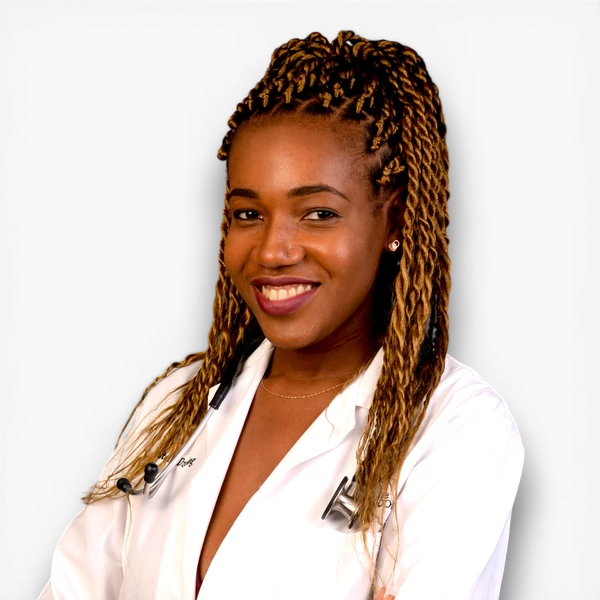
Family doctor and graduate of the Université de Montréal, in good standing with the Collège des médecins du Québec (CMQ), Dr. Karen Dzolang serves as medical director for the CARE network. For eyelid lesions and skin plaques near the eye, she helps frame the evaluation, possible indications, treatment limits and situations where another medical opinion is preferable.