



.svg)


.jpg)

Key points
Ocular rosacea is a chronic inflammatory condition that is often associated with cutaneous rosacea. Without appropriate care, it can cause significant ocular complications. To better understand this condition, here are the key things to remember about its causes, symptoms, and available treatment options.
- Unknown links between ocular rosacea and gastrointestinal disorders: Studies show a strong correlation between the presence of Helicobacter pylori and the worsening of ocular rosacea, opening up new diagnostic perspectives in the diagnostic process.
- Dryness and irritation as early warning signs: Initial symptoms include marked dry eyes, itching, and redness, often mistaken for other conditions such as conjunctivitis, delaying accurate diagnosis.
- Triggers specific to ocular rosacea: Factors such as sun exposure, spicy foods, stress, or even certain hormonal changes can exacerbate symptoms, underlining the importance of identifying these factors for effective management.
- Close link between ocular rosacea and cutaneous rosacea: Often coexisting, the two forms signal an underlying systemic impairment requiring a comprehensive treatment approach to address both aspects of the disease.
- Serious complications of delayed treatment: Without treatment, ocular rosacea can cause recurrent infections (blepharitis) and vision-threatening corneal lesions, highlighting the need for early intervention.
- Effective but underused medical-aesthetic treatments: A combination of oral antibiotics (doxycycline) and appropriate topical treatments can significantly reduce symptoms, offering a comprehensive therapeutic approach.
- The essential role of an optometrist in diagnosis: An optometrist is often the first professional to identify ocular rosacea through detailed examinations, allowing for early diagnosis and a personalized treatment plan, stressing the importance of these eye professionals.
- Preventing flare-ups through lifestyle adjustments: Avoiding irritants, maintaining strict eye hygiene, and adjusting your diet can moderate symptoms over the long term, allowing patients to take an active role in their own care.
Ocular rosacea remains a complex and multifactorial pathology that requires informed and multidisciplinary management. This detailed guide will guide you to better identify, manage, and prevent this condition.
Introduction
Ocular rosacea may seem discreet at first glance, but its effects on eye health and the quality of life of those affected are very real. Often linked to cutaneous rosacea, this inflammatory condition can manifest as persistent dry eyes, redness, or irritation, symptoms that are sometimes confused with other common conditions.
Why is it crucial to better understand this condition? Without early diagnosis and management, ocular rosacea can progress to severe complications, such as frequent infections or corneal damage that can threaten vision. In this guide, discover the causes, symptoms, and proven medical solutions that can effectively manage this condition and improve eye comfort. This lighting is essential for not only treating the condition but also for improving the quality of life of those affected.
Definition and Overview of Ocular Rosacea
Ocular rosacea is a chronic inflammatory condition that primarily affects the eyes and eyelids. It is often associated with another form of rosacea that affects the skin, especially the face. However, it is possible to suffer from ocular rosacea without showing visible skin symptoms. This condition leads to inflammation of the eyelids, lacrimal glands, and sometimes the surface of the eye. It can become disabling if it is not taken care of.
One of the major differences between cutaneous rosacea and ocular rosacea is the areas affected. While the former is characterized by redness, pimples, and dilated vessels on the face, the latter targets the eyes, causing symptoms such as burning, swelling of the eyelids, and dry eyes.
This distinction is crucial because many patients do not immediately make the connection between irritated eyes and an underlying skin condition, delaying diagnosis. The next section explores the causes and triggers of ocular rosacea, providing essential context for understanding how this condition develops.
Causes and Triggering Factors
Several biological and environmental factors contribute to ocular rosacea. Inflammation and dysfunction of the meibomian glands (in the eyelids) play a central role in this disease. These glands, which are responsible for producing the lipids needed to stabilize the tear film, can become dysfunctional in affected individuals, leading to dry eyes. Understanding these mechanisms is essential to effectively target treatments.
Involvement of Demodex mites and bacteria
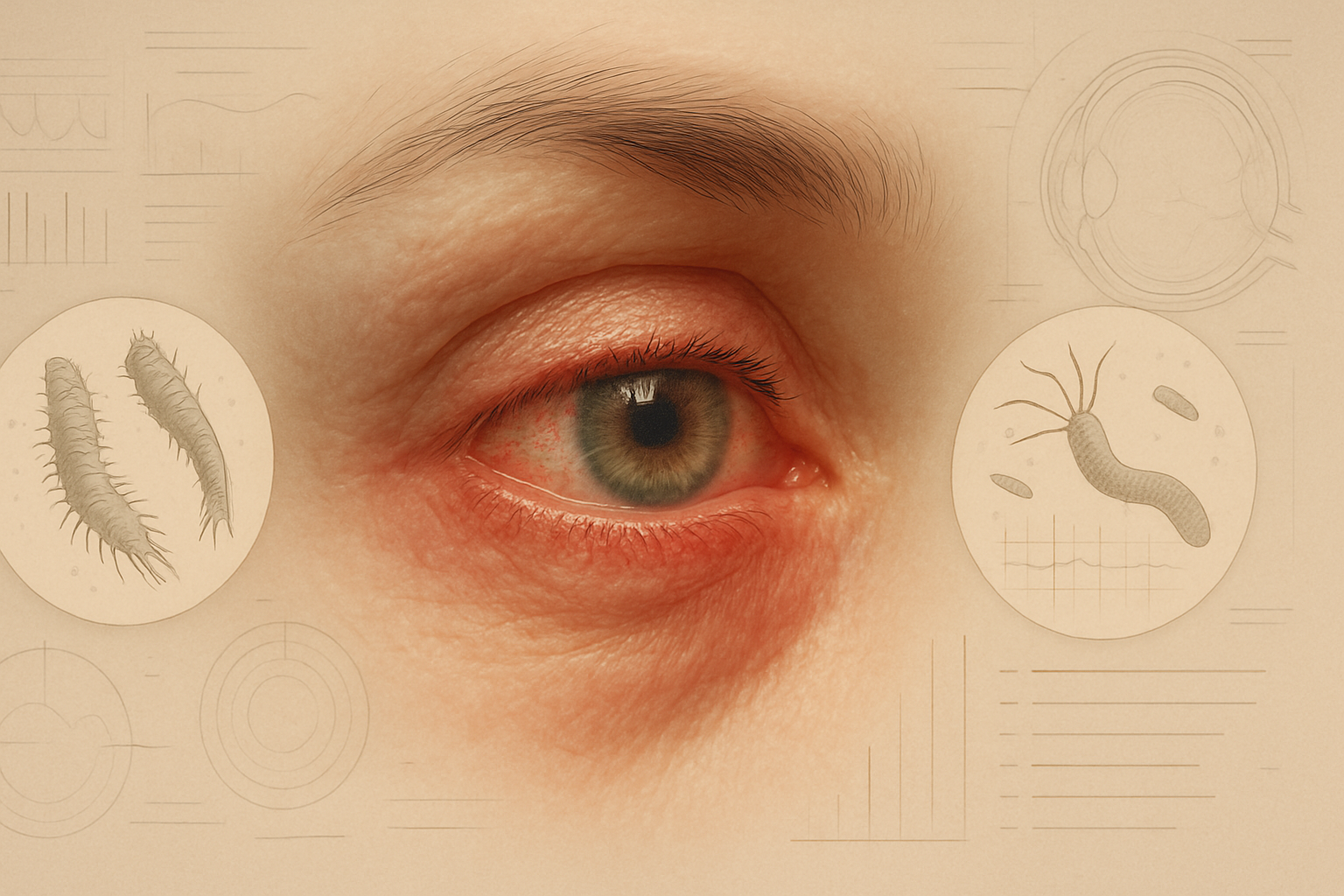
Dust mites Demodex live naturally on the skin, but their excessive proliferation is often observed in patients suffering from ocular rosacea. These parasites can cause local inflammation in the eyelash hair follicles and alter the bacterial balance.
In addition, studies have shown that the bacterium named Bacillus oleronius, found in the digestive system of Demodex mites, could exacerbate inflammation.
Link with Helicobacter pylori
Another suspected factor is bacteria. Helicobacter pylori, responsible for gastric ulcers. Research has suggested a correlation between gastrointestinal disorders triggered by H. pylori and rosacea, although the exact mechanisms are not yet fully understood. The elimination of this bacteria through antibiotic treatments has sometimes led to an improvement in the symptoms of rosacea — cutaneous as well as ocular. This connection highlights the importance of a holistic approach in diagnosis and treatment.
Environmental triggers
External factors, such as excessive exposure to the sun, wind, or very hot or cold climates, can trigger or worsen the condition. Other triggers include:
- Stress
- Alcohol
- Spicy food
- Medicines that dry the eyes
This complex interaction between the environment, immunity and microbiological imbalances highlights the importance of personalized care. Now that we've looked at the causes, it's crucial to recognize symptoms and warning signs for early intervention.
Symptoms and Warning Signs
Various symptoms can alert you to ocular rosacea. These signs often appear gradually and mainly affect the areas around the eyelids and ocular surface.
Common symptoms
- Redness and inflammation : Swollen, red eyelids and red conjunctival redness are characteristic signs.
- Burning or foreign body sensations : Patients often report that their eyes feel “dry” or “itchy,” which can be mistaken for a simple dry eye problem.
- Excessive tearing or drying : According to the patients, the eyes are either very dry or constantly crying.
- Blurred vision : A film of sebum or inflammatory deposits on the ocular surface may affect visual clarity.
Advanced events
If severe or untreated, ocular rosacea can progress to complications such as:
- Recurrent chalazion or stye : Small, non-painful and inflammatory cysts on the eyelids.
- Chronic blepharitis : Persistent infections of the edges of the eyelids.
- Keratitis : A corneal inflammation that can lead to scarring and, in rare cases, vision loss.
Early detection can avoid these serious complications. With this knowledge of symptoms, let's now explore the medical solutions and prevention strategies available.
Medical and Preventive Solutions
Treatment for ocular rosacea often combines specialized medical care with special attention to eye hygiene.
Medical care
Optometrists may prescribe different types of treatments depending on the severity of the condition:
- Eye drops : Some formulas containing cyclosporin or tacrolimus reduce inflammation. Steroids may also be useful in the short term, under strict supervision.
- Oral antibiotics : Optometrists often prefer medications such as doxycycline or azithromycin, which not only have an antibiotic but also anti-inflammatory action.
- UV filter glasses : Avoiding over-exposure to the sun is critical.
Daily preventions
- Eyelid hygiene : Warm compresses help keep glands uncorked, while gentle eyelid cleaning removes debris.
- Avoid triggers : Identifying your own triggers (alcohol, food, stress) can limit relapses.
- Balanced diet : Supplementing with omega-3 often improves the quality of the tear film.
Recent technologies, such as Intense Pulsed Light (IPL), have been proven to improve meibomian gland health. In addition to these medical and preventive strategies, it is essential to know when to see a professional.
Conclusion
Ocular rosacea is a complex condition requiring rapid and appropriate treatment. By understanding its root causes, such as meibomian gland dysfunction, the role of Demodex mites, or the involvement of bacteria such asH. pylori, patients and health professionals can better anticipate and manage its varied symptoms. Treatment strategies ranging from medical care to targeted preventive measures, such as regular eye hygiene and the avoidance of triggers, offer real hope for improvement.
The key lies in proactive action: recognizing warning signs and consulting an optometrist at the first symptoms. A personalized approach, combined with medical advances, can transform this debilitating condition into a well-controlled condition, thus ensuring a better quality of life. In a future context, continued research into treatments and preventive approaches could open up new ways to further improve the management of ocular rosacea, offering a brighter and more comfortable future for those who suffer from it.
FAQs
Although some symptoms may seem mild at first, there are several signs that warrant prompt consultation. For example:
- Persistent blurred vision, even after glasses have been cleaned.
- Persistence of chalazions despite basic care.
- Increased burning or pain over time.
An optometrist will perform a detailed examination to differentiate ocular rosacea from other problems such as simple conjunctivitis or allergy. In addition, long-term follow-up makes it possible to adapt the treatment in case of evolution. Recognizing the importance of early consultation can prevent long-term complications and improve quality of life.


Do not tolerate discomfort anymore. Take action now.
