



.svg)


.jpg)

What is a chalazion?
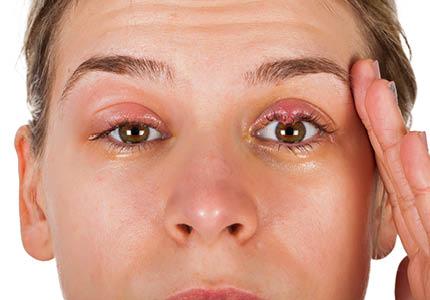
A chalazion is a small bump that appears on the eyelid due to a blockage in a meibomian gland. These glands, located on the inside of the eyelids, are responsible for producing a thin layer of sebum that protects the surface of the eye. When one of these glands is obstructed, it can become inflamed and cause a mass that is not painful at first but can grow and become uncomfortable over time.
Chalazions may go away on their own, but in some cases they persist or become bothersome enough to require medical treatment. This article aims to inform about the various treatment options, both surgical and non-invasive, that are available to help you get rid of this annoying condition. We'll discuss the procedures in detail, what you can expect, and the benefits of non-surgical alternatives that help minimize the risk of recurrence.
When is treatment required?
A chalazion is not just an isolated bump on the eyelid; it is often a warning sign that the meibomian glands are malfunctioning. These glands are essential for the production of a protective oil that prevents the evaporation of tears and maintains the health of the ocular surface. When these glands become clogged repeatedly, it indicates an underlying problem that requires careful evaluation. Ignoring these signs can not only prolong discomfort, but also increase the chances of recurrences.
An assessment of risk factors is therefore essential in order to understand why the chalazion has formed and how to better manage the situation in the long term. Underlying causes may include conditions like rosacea, blepharitis, or poor eyelid hygiene. An accurate diagnosis and appropriate management are necessary to reduce the risk of new gland obstructions and, thus, to prevent the reappearance of chalazions.
Surgical treatments for a chalazion
Incision and curettage
Incision and curettage is a common and effective surgical procedure for treating chalazions, especially when they don't respond to conservative treatments like hot packs or antibiotics. Here is what this intervention consists of.
Description of the surgical process
The aim of the incision and curettage is to remove the obstructed contents of the affected meibomian gland in order to relieve symptoms and prevent recurrence. The procedure takes place in several simple steps that are well mastered by health professionals:
Preparation:
- The intervention is performed on an outpatient basis, in a dedicated operating room.
- The surgeon looks at the eyelid to confirm that surgery is still needed.
- Local anesthesia is given by injecting it into the eyelid at the level of the chalazion.
- This stage may be mildly painful for a few seconds.
Surgical procedure:
- Special tweezers are placed around the chalazion to turn the eyelid upside down and control bleeding.
- The surgeon makes a small incision, usually on the inside of the eyelid.
- The contents of the chalazion are then emptied using a curette.
- This stage can be sensitive but not painful thanks to anesthesia.
Post-operative care:
- An antibiotic ointment is applied to the site of the incision to prevent infection.
- A pressure bandage may be placed over the eye for a few hours to limit post-operative swelling.
- The patient is given instructions for home care, which includes applying warm compresses and using an antibiotic ointment for a few days.
What to expect during the procedure
The procedure is generally very quick, taking around 15 to 20 minutes from start to finish. Thanks to local anesthesia, the patient does not experience any pain during the procedure, only slight pressure. After surgery, most patients can go home the same day, without requiring hospitalization.
Potential risks
Like any surgical procedure, incisions and curettage involve certain risks, even if they remain relatively rare:
- Infection : Although strict hygiene measures are respected, there is a slight risk of infection, which is generally avoided through the application of antibiotic ointments.
- Scars : Since the incision is made on the inside of the eyelid, the risk of a visible scar is minimal.
- Healing time : The majority of patients notice an improvement within a few days to a week, with a gradual reduction in swelling.
Success rate and recidivism
Incision and curettage are very effective in eliminating a chalazion. A 2018 study of 1498 consecutive cases revealed an overall success rate of 92.4%. This means that most patients see their chalazion disappear completely after the procedure. However, recurrence may occur if underlying factors such as meibomian gland dysfunction are not properly managed.
Steroid injections
Steroid injection is a less invasive alternative to surgery for the treatment of chalazions. It aims to reduce inflammation of the chalazion without requiring an incision. This method is especially useful for chalazions that are inflammatory but small in size.
Treatment description:
Steroid injections, often based on triamcinolone acetonide, are injected directly into the chalazion to target inflammation within the blocked gland. A usual dose varies from 0.1 to 0.2 ml of a 40 mg/ml triamcinolone acetonide solution. The steroid works by reducing the body's inflammatory response, allowing the chalazion to gradually resolve.
When is this option preferred?
Steroid injections are preferred in the following situations:
- Persistent chalazions : This option is often used after conservative treatments such as hot packs, eyelid hygiene, and topical antibiotics have failed.
- Alternative to surgery : For patients who prefer to avoid surgery, steroid injection is a less invasive solution with comparable success rates.
- Small chalazions : The injections are particularly effective for small chalazions (less than 2 mm), where surgery may be considered excessive.
Effectiveness
Clinical studies have shown a high resolution rate for steroid injections.
For example:
- One study revealed a complete resolution rate of 87.5% with a triamcinolone injection at 40 mg/ml, compared to 66.6% for a lower concentration of 10 mg/ml.
- Another study showed that steroid injections had a success rate of 82.5%, very close to that of incision and curettage (77.5%).
Possible side effects
Although generally well tolerated, steroid injections have some minor risks:
- Yellow-white deposits on the eyelids: Observed in some patients, these deposits are temporary and disappear over time.
- Increased intraocular pressure: Rare but possible, this increase was reported in two out of 32 patients in one study, requiring monitoring in patients at risk.
- Skin discoloration: In some cases, the injection may cause local skin discoloration, especially in patients with darker skin.
Steroid injections are therefore an attractive option for patients with smaller, more inflammatory chalazions. They offer an effective alternative to surgical treatments while reducing the risk of more serious side effects. However, for larger or recurring chalazions, other options may be required.
Non-invasive treatments for a chalazion
Intense pulsed light (IPL)
IPL (Intense Pulsed Light): How IPL decreases the risk of chalazion recurrence
Intense pulsed light (IPL) is a non-invasive method that is particularly effective in reducing the recurrence of chalazions. It works by improving the function of the meibomian glands, located in the eyelids, by heating the area to thin out the oil that may be blocked. This blockage is one of the main causes of the appearance of chalazions. By helping these glands function better, IPL reduces inflammation and prevents new chalazions from forming.
The mechanism is simple: IPL not only treats the existing chalazion, but it also prevents recurrences by directly addressing the source of the problem, i.e. the malfunctioning of the Meibomian glands. By unblocking the glands and reducing dilated small blood vessels, it limits the spread of inflammation that can cause chalazions to reappear.
Expected results
The results of clinical studies show that IPL has a significant effect on reducing recurrences. For example, a study showed that 70.5% of patients treated with IPL saw their chalazion disappear or significantly reduce in size, and most importantly, they had a much lower recurrence rate compared to conventional surgical treatments.
Another study from 2024 pointed out that IPL was particularly effective in treating recurrent and large chalazions. The success rate in these patients was as high as 85.71%, which proves the effectiveness of IPL in preventing future gland obstructions.
Benefits of IPL for the prevention of recurrences
The benefits of IPL are not limited to the simple reduction of the ongoing chalazion. Its real advantage lies in its ability to:
- Preventing recurrences: Improving the function of the meibomian glands with IPL significantly reduces the risk of a chalazion reappearing.
- Non-invasive: Without surgery or incisions, IPL offers a gentle solution to treat chalazions while reducing the risk of them coming back in the long term.
- Adapted to difficult chalazions: For patients suffering from recurrent chalazions, IPL has been shown to be more effective than traditional treatments such as hot compresses or even surgery.
Thus, IPL is not only an effective method for treating current chalazions, but above all it is a lasting solution to prevent recurrences, by directly addressing the underlying cause: meibomius gland dysfunction.How does IPL work to treat chalazions: improving meibomian gland function, reducing inflammation.
Photobiomodulation (LLLT): An innovative treatment option
After examining the benefits of intense pulsed light (IPL) in managing chalazions, it is important to look at another non-invasive and equally promising method: photobiomodulation, or low-intensity light therapy (LLLT). Like IPL, this approach aims to address the source of the problem while significantly reducing the chances of recurrence. However, photobiomodulation is distinguished by its unique mechanism, which directly stimulates tissue healing and reduces inflammation in a painless manner.
Photobiomodulation, also called low intensity light therapy (LLLT), is an innovative method for treating chalazions in a non-invasive manner. This technique uses specific light wavelengths, typically in the red or near infrared spectrum, to stimulate tissue healing, reduce inflammation, and improve meibomian gland function.
Principle and mechanism of action
The principle of photobiomodulation is based on the application of low-intensity light to the affected area, through a mask or a specific device. This light penetrates the skin and underlying tissue to cause several beneficial effects:
- Stimulation of ATP production: Increased cellular energy production promotes the regeneration of damaged tissue.
- Reducing inflammation: Light reduces inflammatory markers, relieving the discomfort and swelling associated with chalazion.
- Antibacterial effect (blue light): Some wavelengths, such as blue, have an antimicrobial effect that helps prevent potential bacterial infections.
By improving tissue health and reducing inflammation, photobiomodulation facilitates the natural healing of chalazions while preventing their reappearance.
Effectiveness
Clinical studies have shown that photobiomodulation can be very effective in treating chalazions, especially in recalcitrant cases that do not respond to more traditional treatments. For example, one study reported complete resolution of chalazion in 46% of patients after a single 15-minute session and up to 92% after two sessions. These results are particularly encouraging for patients who have tried other treatments without success.
Treatment protocol
Photobiomodulation treatment is simple and well tolerated:
- Duration of sessions: Each session generally lasts between 15 and 30 minutes.
- Frequency: If necessary, the treatment can be repeated every three weeks.
- Combination with other therapies: To improve results, photobiomodulation can be combined with techniques such as manual expression of the Meibomian glands, which involves squeezing the glands to remove blocked oil.
Benefits of photobiomodulation
Photobiomodulation has a number of advantages over traditional treatments:
- Non-invasive and painless: Unlike surgery or injections, photobiomodulation requires no incisions or physical manipulation, offering a comfortable solution for the patient.
- No recovery time: After a session, the patient can immediately resume daily activities without any restrictions.
- Reduced risk of recidivism: As with IPL, photobiomodulation helps to restore the function of the Meibomian glands, thus significantly reducing the risk of a chalazion reappearing.
- Overall improvement in eye health: In addition to treating chalazions, photobiomodulation improves the overall health of the eyelids and glands, which is beneficial in preventing other eye problems.
Comparison with other treatments
Compared to methods like incision and curettage, photobiomodulation offers a non-surgical alternative with much less risk of complications. It can also be used in addition to other non-invasive therapies, such as IPL, to optimize results, especially in the most complex or refractory cases.
Jett Plasma: An Innovative Approach to Treating Chalazions
Although Jett Plasma technology is primarily used in aesthetic treatments, its unique properties also offer interesting potential in the treatment of chalazions. This non-invasive method, based on the use of plasma, could provide a new solution to reduce inflammation and accelerate the healing of chalazions without the need for surgery.
Principle of operation
Jett Plasma uses electric arc technology to generate plasma, an ionized gas considered to be the fourth state of matter. This plasma creates controlled heat in contact with the skin, producing several beneficial effects that can be applied to the treatment of chalazions:
- Stimulation of collagen production : Plasma promotes tissue regeneration by stimulating the production of collagen, thus accelerating the repair of affected areas.
- Anti-inflammatory effect : The heat generated by plasma helps to reduce local inflammation, a key factor in the treatment of chalazions.
- Antibacterial action : Plasma also has antibacterial properties, which can prevent or treat potential infections that sometimes accompany chalazions.
Potential application to chalazions
Although the use of Jett Plasma to treat chalazions is still in the research phase, its effects on inflamed and obstructed tissue offer promising prospects. Here is how this technology could be applied in the treatment of chalazions:
- Reducing inflammation : The heat produced by the plasma makes it possible to reduce the inflammation of the Meibomian glands, responsible for chalazion.
- Liquefaction of secretions : One of the major problems with chalazions is the blocking of the secretions of these glands. Plasma can help liquefy these secretions and facilitate their evacuation.
- Stimulation of healing : Plasma promotes the repair of damaged tissue and accelerates the healing process, reducing the duration of symptoms.
Potential benefits of Jett Plasma for chalazions
Using Jett Plasma to treat chalazions has several advantages over surgical methods and other invasive options:
- Non-invasive : Unlike incision and curettage, Jett Plasma does not require surgery, reducing the risk of scars and infections.
- Rapidity : A Jett Plasma treatment session is generally quick, lasting between 5 and 15 minutes depending on the area being treated. The patient can often return to daily activities immediately after treatment.
- Few side effects : Side effects are usually minimal and temporary, such as slight redness or localized heat, which go away quickly.
Although more research is needed to validate the use of Jett Plasma in the treatment of chalazions, this approach seems to offer an interesting alternative to traditional methods. Its ability to reduce inflammation, liquefy secretions, and accelerate healing while being non-invasive and rapid makes it a potential solution for patients looking to avoid surgical treatments. Jett Plasma could thus become a new therapeutic option in the management of chalazions, especially for those looking for gentle and effective solutions. How plasma can help reduce or eliminate a chalazion without an incision.
Conclusion: Making the right treatment choice
It is essential to consult a health professional to assess the severity of a chalazion, as each case is unique and requires an adapted approach. The size of the chalazion, its length of presence, as well as the patient's preference for non-invasive or surgical methods are all factors to consider when choosing treatment.
At the CARE Clinic, we offer personalized evaluations to guide you to the most appropriate treatment, whether through non-invasive methods such as IPL, photobiomodulation, or Jett Plasma, or through more traditional solutions such as incision and curettage. Make an appointment today for a consultation and benefit from the expertise of our optometrists to effectively treat your chalazion and prevent recurrences.
FAQs
Treatments may include non-invasive methods such as hot packs, IPL (intense pulsed light), photobiomodulation, or Jett Plasma. In some cases, an incision and surgical curettage may be required.
Surgical treatments, like incision and curettage, require direct intervention to remove the chalazion, while non-invasive methods (IPL, photobiomodulation, Jett Plasma) use light or plasma to reduce inflammation and help heal without incision or anesthesia.
These treatments are non-invasive, painless and allow for rapid recovery. They effectively reduce inflammation, restore meibomian gland function, and decrease the risk of chalazion recurrence.


Do not tolerate discomfort anymore. Take action now.
