A small silicone plug is placed by the optometrist in the tear duct to slow down natural tear drainage.
A small soft plug, about the size of a grain of sand, placed in the tear duct to slow down the drainage of tears. Biocompatible and well tolerated material.
The optometrist can remove the plug or replace it. A tested choice: temporary plug first, then adjustment according to your comfort.
By slowing drainage, the plugs keep your natural tears on the surface of the eye. More effective than adding drops that would also drain away.



There are several situations where the eye lacks sufficient tears or drains tears too quickly. Your optometrist will determine which applies to your case.
Dry eye where the eye produces fewer tears than normal, despite drops and home hygiene.
Sjögren's syndrome or another autoimmune disease that reduces tear production.
Persistent dry eye after LASIK that does not improve with artificial tears alone.
Contact lens intolerance due to lack of tears by the end of the day.
Persistent dryness despite warm compresses, eyelid cleaning, and lubricating drops.
Certain situations can make punctal plugs unsuitable, sometimes only temporarily. Your optometrist will always check for these before considering placement.
Active infection of the tear drainage duct or the lacrimal sac near the nose.
Severe uncontrolled blepharitis or active eyelid infection.
Lacrimal ducts already obstructed or very narrowed, with abnormal tear flow.
Tears already running excessively down the cheek (excessive tearing that could worsen).
Known allergy to silicone or any of the materials in the plugs.
Three simple steps for a quick, painless procedure with no downtime.
The optometrist examines your eyelids, tear ducts, and tear film. They check that the placement is suitable for your case, then apply an anesthetic drop.
The optometrist inserts the silicone plug directly into the tear duct, using a slit lamp. A slight pressure for a few seconds per eye.
The optometrist checks the position of the plug with a few colored drops. You can leave immediately. If discomfort persists, the plug can be removed or adjusted.
THE CARE EXPERIENCE

An optometrist and founder of the CARE Clinic, Dr. Francesca Olinga understands dry eye because she has experienced it. Experienced in the management of complex cases (neuropathic pain, demodex, chalazions), she uses innovation and attentive listening to guide you toward improved eye comfort.

An optometrist and member of theOOQ, Dr. Daniel Nguyen splits his practice between eye exams in an optometry clinic and advanced management of dry eye conditions at the CARE Clinic. This dual practice provides him with a comprehensive view of his patients' visual health, from routine screenings to cutting-edge therapeutic protocols. dry eye Biography of Karine Charbonneau
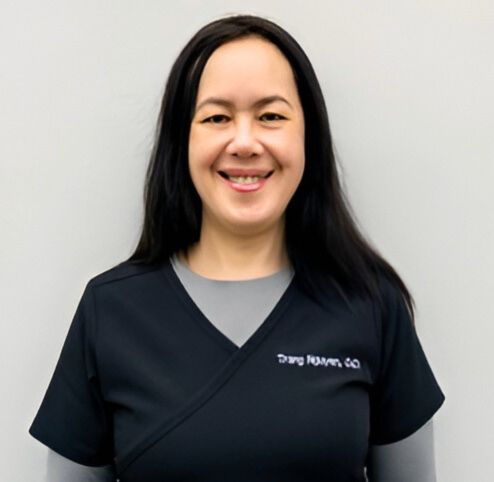
Optometrist with over 30 years of experience and speaker for eye care professionals. Dr. Nguyen has experience in improving visual quality affected by dry eye. She supports her patients in reconciling their aesthetic goals (makeup, cosmetics) and optimal eye comfort.