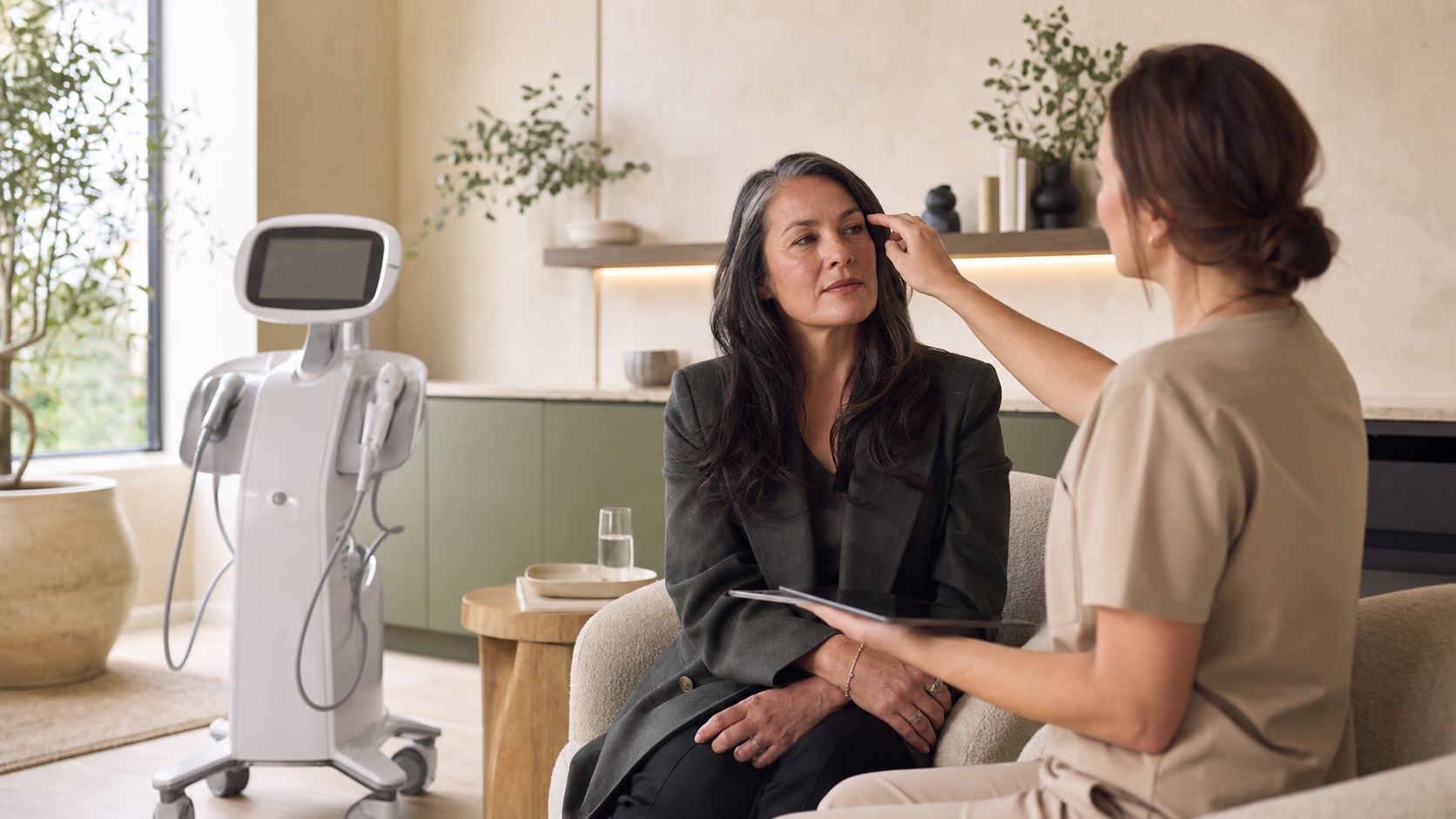
Thermal energy is delivered at precise depths, prompting your body to form new collagen in the following weeks.
Focused ultrasound delivers thermal energy at precise depths. MF2 at 1.5 mm on eyelids. MF1 at 3.0 mm on periorbital areas.
Targeted heat triggers deep tissue stimulation. The body forms new collagen and elastin. Gradual lifting effect over 3 to 6 months.
Metal corneal protective shells placed on the eyes during eyelid application. Temples and bony orbit are not treated.


Five periocular concerns that Dr. Dzolang may address with HIFU, once it is confirmed that the eyelid laxity is within the non-surgical range.
Loose upper eyelid (mild to moderate dermatochalasis) that creates a tired appearance without reaching the threshold for surgery.
Eye area wrinkles (crow’s feet) that deepen at rest and are no longer improved by creams.
Drooping eyebrow tail that closes the gaze and gives the eyes a sad appearance.
Loose skin under the lower eyelids showing a loss of firmness that increases with age.
High cheeks and temples that have lost tone and accentuate the features around the eyes.
Three situations where HIFU is not performed, and three scenarios where waiting or choosing another option is preferred.
Active ocular inflammation — such as uveitis, keratitis, or conjunctivitis.
Active skin cancer or uninvestigated suspicious lesion in the treatment area.
Pacemaker, defibrillator, or facial metal implants (including PDO threads).
Recent hyaluronic acid filler (within the last 4 weeks) — mandatory waiting period to prevent product degradation.
Recent intraocular implant (such as cataract surgery less than 6 months ago) — ophthalmological clearance required.
A visit typically lasts 30 to 45 minutes and includes an assessment, application of anesthetic, protective eye shields, ultrasound treatment, and at-home care advice.
Periorbital skin examination, contraindication check. Numbing cream 30-45 min prior. Corneal metallic protective shields placed on eyes.
MF2 (1.5 mm) cartridge on eyelids, MF1 (3.0 mm) on periorbital areas. Approximately 120 shots on the eye contour. Diffuse warmth and brief tingling. Temple and bony orbit not treated.
Immediate return to activities. Slight redness and swelling resolve within 1 to 5 days. Gradual lifting effect through neocollagenesis over 3 to 6 months. Cold compresses, SPF 30+, and avoid saunas or intense exercise for 48-72 hours.
THE CARE EXPERIENCE
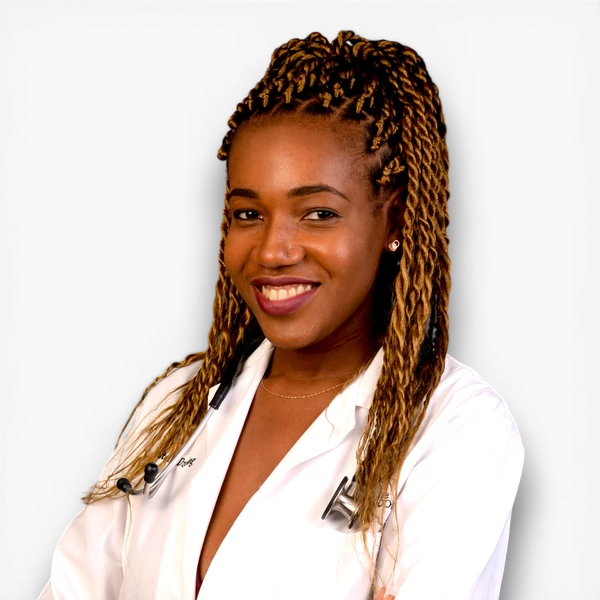
Family doctor and graduate of the Université de Montréal, in good standing with the Collège des médecins du Québec (CMQ), Dr. Karen Dzolang serves as medical director for the CARE network. For eyelid lesions and skin plaques near the eye, she helps frame the evaluation, possible indications, treatment limits and situations where another medical opinion is preferable.