The CO2 laser beam precisely targets the cholesterol deposit in the thin skin of the eyelid, avoiding surrounding tissues.
The laser allows for precise targeting of clearly visible deposits, aiming to preserve the surrounding skin as much as possible during the procedure.
This technology is designed to act delicately on sensitive areas. However, an assessment of your eyelid elasticity will be required beforehand.
It is important to understand that the laser treats the appearance of the plaque, but does not affect your lipid metabolism in any way.


The eye contour is a very thin and sensitive area. If we opt for laser treatment, strict protective measures, such as eye shields, will be put in place to ensure your safety.
This approach is generally discussed for superficial and well-defined plaques, when the eyelid skin shows good healing capacity.
Deposits located closer to thesurfacegenerally respond better to this targeted vaporization approach, which we can assess together.
The position of the plaque must allow us to perform asafe procedure, without ever compromising the function of your eyelid.
A frank discussion about thepossible resultsand the risks of recurrence is essential before seriously considering this option.
If the plaque is too extensive, too close to the eye, or if you have a history of difficult scarring, the doctor may direct you toward another option.
If the appearance of the plaque raises any doubts, we will first proceed with a thorough medical evaluation before any treatment.
Inflamed or infected skin in the treatment area requires postponing the procedure to ensure your complete safety.
If you are prone to forming thick scars, we will consider other, gentler alternatives to preserve your skin.
Each meeting begins with an assessment of the plaque and its possible causes. We then discuss the treatment, the exact price, and the healing stages.
We carefully examine your plaques and skin quality to assess the feasibility of a safe laser treatment.
We explain the potential benefits, limitations, and risks so that you can make an informed and comfortable decision.
If the treatment proceeds, we support you throughout the healing period to monitor your skin's proper recovery.
THE CARE EXPERIENCE
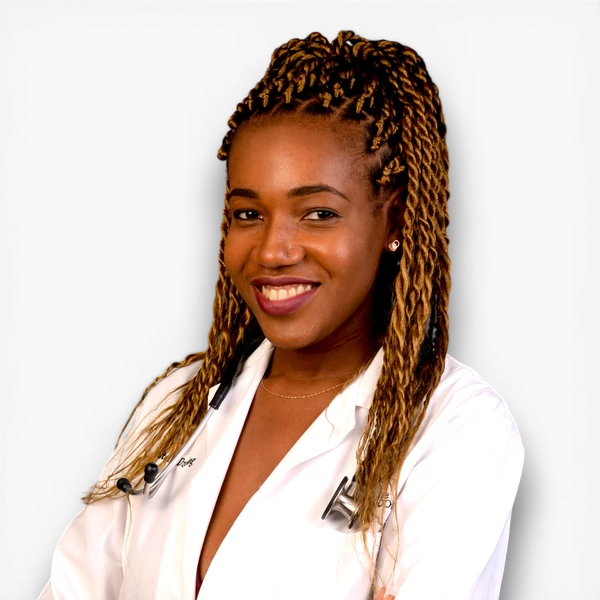
Family doctor and graduate of the Université de Montréal, in good standing with the Collège des médecins du Québec (CMQ), Dr. Karen Dzolang serves as medical director for the CARE network. For eyelid lesions and skin plaques near the eye, she helps frame the evaluation, possible indications, treatment limits and situations where another medical opinion is preferable.