Tetra PRO CO2 Laser in Greater Montreal for eyelid rejuvenation and lesion removal

At CARE Clinic, Dr. Karen Dzolang evaluates the treatment area and selects the most appropriate mode—Cool Peel for rejuvenation or ablative for tightening and lesion removal.
Laser CO2 Tetra PRO at Clinique CARE — eyelid rejuvenation and lesion removal
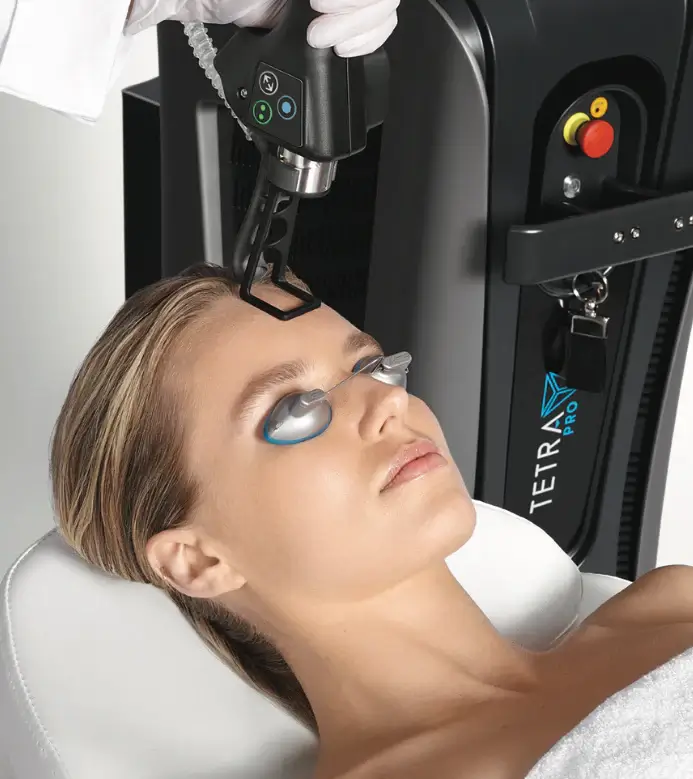
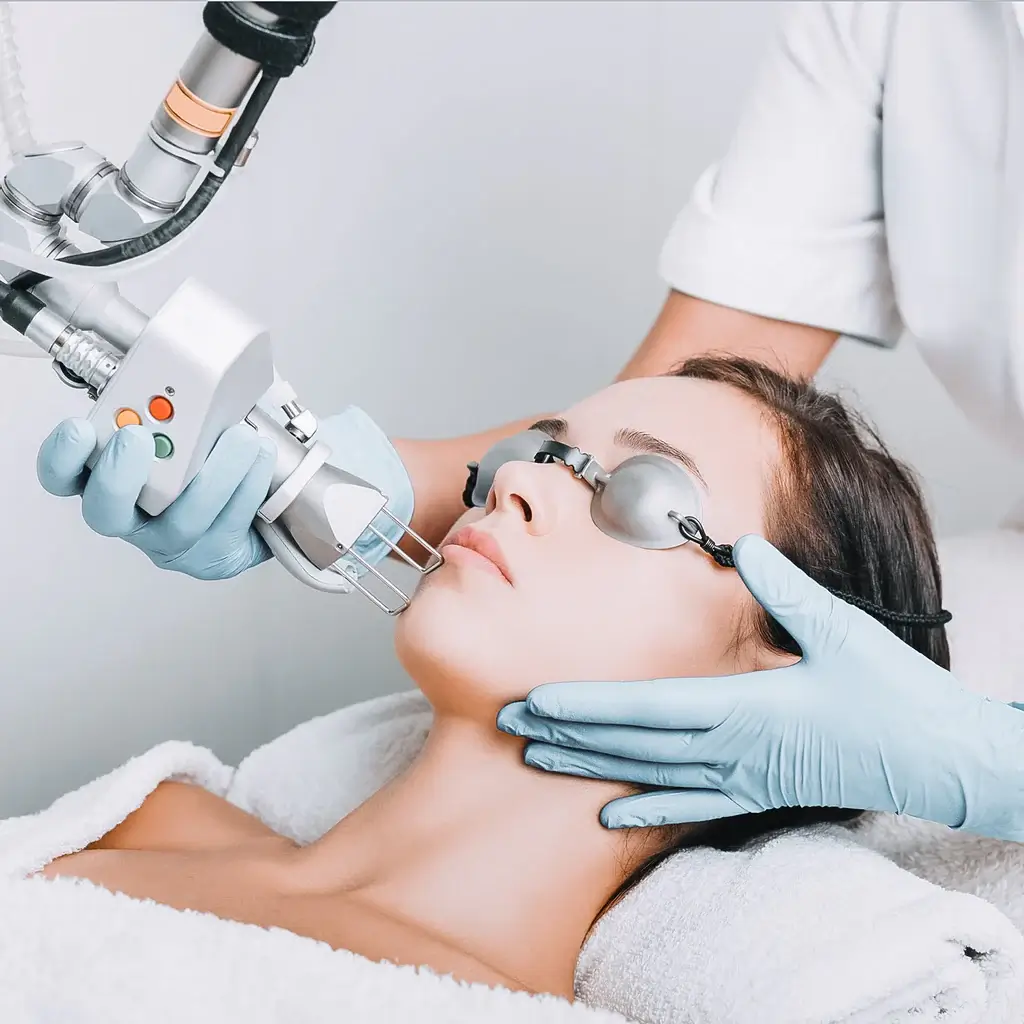
Application of the Laser CO2 Tetra PRO on the eyelids by the doctor
CoolPeel mode for periorbital rejuvenation
Laser CO2 Tetra PRO at Clinique CARE — eyelid rejuvenation and lesion removal
Application of the Laser CO2 Tetra PRO on the eyelids by the doctor
CoolPeel mode for periorbital rejuvenation
Laser CO2 Tetra PRO at Clinique CARE — eyelid rejuvenation and lesion removal
Application of the Laser CO2 Tetra PRO on the eyelids by the doctor
CoolPeel mode for periorbital rejuvenation
Le principe

How the Tetra PRO works on eyelid skin

Three essentials: an ablative mode for tightening and lesion removal; a Cool Peel mode for rejuvenation with a short recovery; and customizable settings tailored to each case.

01

The ablative mode

The laser creates microscopic columns in the skin that trigger a natural healing response. Collagen reforms and the skin tightens.

02

The CoolPeel mode

The CoolPeel mode uses ultra-short pulses that renew the surface of the skin without transferring too much heat around it. Recovery of only 3 to 5 days.

03

Adaptability

The DEKA Tetra PRO (AMWC 2024 Award winner) lets us adjust depth and energy based on the area and the goal. The doctor selects the right mode and settings.

Are you a candidate for the CO2 Tetra PRO laser for eyelids?

If you are considering the removal of a benign skin lesion or want to refresh the skin around your eyes without traditional surgery, you can discuss the CO2 laser with the doctor.
Eyelid skin tags
Seborrheic keratosis
Signs of aging around the eyes

When is the CO2 Tetra PRO Laser recommended?

Suitable for various eyelid and eye area concerns, from skin tightening to the removal of skin lesions. The doctor selects the appropriate mode for each individual case.

Dermatochalasisloose upper eyelid skin that can fall onto the lashes or make the eye area appear heavier.

Xanthelasmayellow plaques on the eyelid, mainly at the inner corner, sometimes large or thick.

Skin tagssmall stalked skin growths on the edge or base of the eyelids.

Wrinkles around the eyes (crow's feet) or skin that has lost its texture, treated with non-ablative Cool Peel mode.

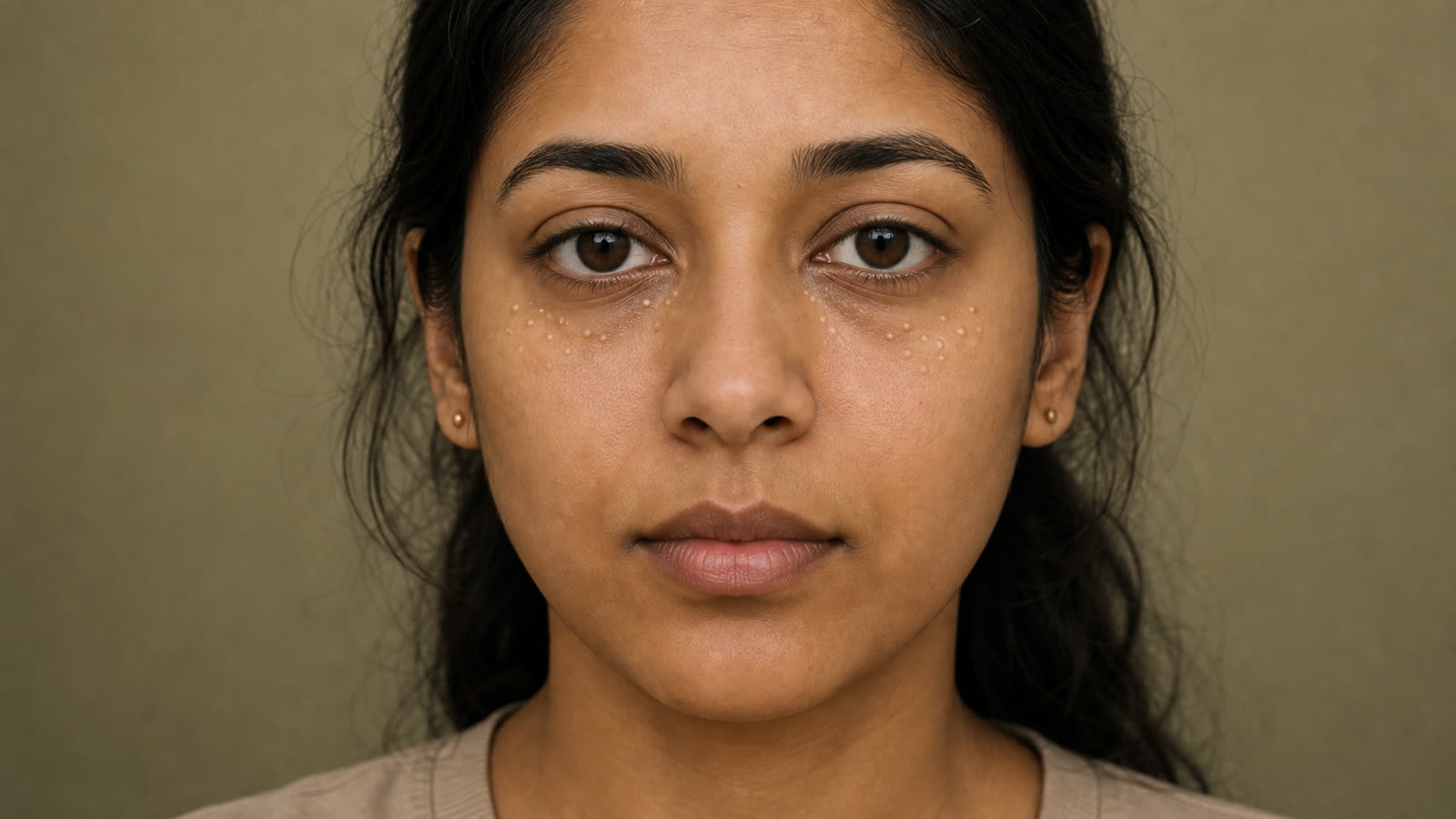
Miliasmall white bumps around the eyes, sometimes clustered on the eyelid.

When the CO2 Tetra PRO Laser is not suitable

The CO2 laser uses thermal energy on the skin—certain situations can make treatment inappropriate. The doctor systematically checks for these before every session.

Active infection on the treatment area — herpes, eczema, dermatitis, or cellulitis should be treated before the session.

Accutane or Roaccutane taken in the last 6 to 12 months — especially relevant for the ablative mode.

Tanning or intense sun exposure within the last 2 to 4 weeks — risk of lighter or darker spots.

Dark skin — higher risk of lighter or darker spots, especially in ablative mode. Cool Peel mode is generally safer but should be discussed first.

Known tendency to keloid or hypertrophic scars.

How a CO2 Tetra PRO Laser session works at CARE Clinic

Three clear steps: assessment and numbing, laser application, and recovery, which varies depending on the mode used.

01

Exam, mode selection and numbing

The doctor examines the area and selects the right mode (CoolPeel or ablative). Numbing cream 30 to 60 min before. Local injected anesthesia possible for deeper areas.

02

Laser application on the treatment area

The doctor applies the Laser CO2 Tetra PRO in small passes. Fractional mode treats the skin in micro-spots, sparing surrounding tissue. Diffuse warmth, sometimes tingling, no intense pain.

03

Healing and return to daily activities

CoolPeel: recovery 3 to 5 days with mild redness. DEKA ablative mode: recovery 7 to 10 days with redness and fine crusts. SPF 50+ sun protection required for 4 to 8 weeks.

THE CARE EXPERIENCE

Beyond treatments, we offer care rooted in listening and empathy. Each patient is unique, and our greatest satisfaction is restoring the comfort you thought you had lost.
An approach appreciated by our patients. Rated 5.0/5 on Google.

Who provides Laser CO2 Tetra PRO at CARE Clinic?

Dre Karen Dzolang — Directrice médicale et médecin de famille du réseau CARE
Dr. Karen Dzolang
Medical Director | Family Physician

Family Physician Trained at the Université de Montréal and a current member in good standing of the Collège des médecins du Québec (CMQ), Dr. Karen Dzolang serves as the medical director of the CARE network. For eyelid lesions like xanthelasma, she helps frame the assessment, possible indications, limits of removal, and situations where another medical opinion might be preferable.

FAQS
How long does a session take?

The session lasts between 15 and 45 minutes depending on the area treated and the mode (Cool Peel or ablative). The entire visit, including the medical exam and application of numbing cream, takes about 1 to 1.5 hours at the clinic.

What’s the difference between Cool Peel and the ablative mode?

Cool Peel is a gentle, superficial approach for skin rejuvenation, with a recovery time of 3 to 5 days. The DEKA ablative mode penetrates deeper and is used for tightening, removal of xanthelasma, and skin tags, with a recovery time of 7 to 10 days. The doctor selects the mode best suited to your needs.

Is the treatment painful?

A topical numbing cream is applied 30 to 60 minutes before the treatment. For deeper areas or larger xanthelasmas, a local injected anesthesia may be used as well. You may experience warmth or tingling, but not significant pain.

How many sessions will I need?

The number of sessions and the timing between them are personalized by the doctor according to your situation, the depth, and the area being treated.

How long is the recovery period?

This depends on the treatment mode. Cool Peel: redness and a mild sunburn sensation for 3 to 5 days. DEKA ablative mode: redness and small crusts for 7 to 10 days. When you can return to social activities depends on the mode chosen.