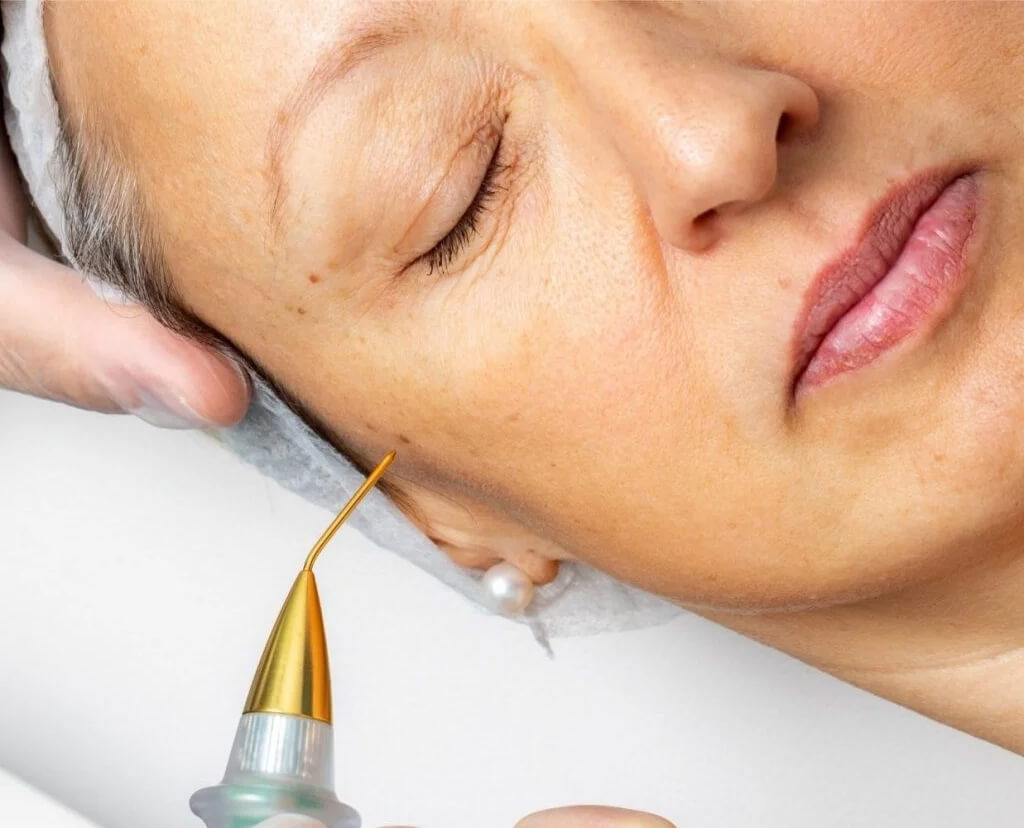
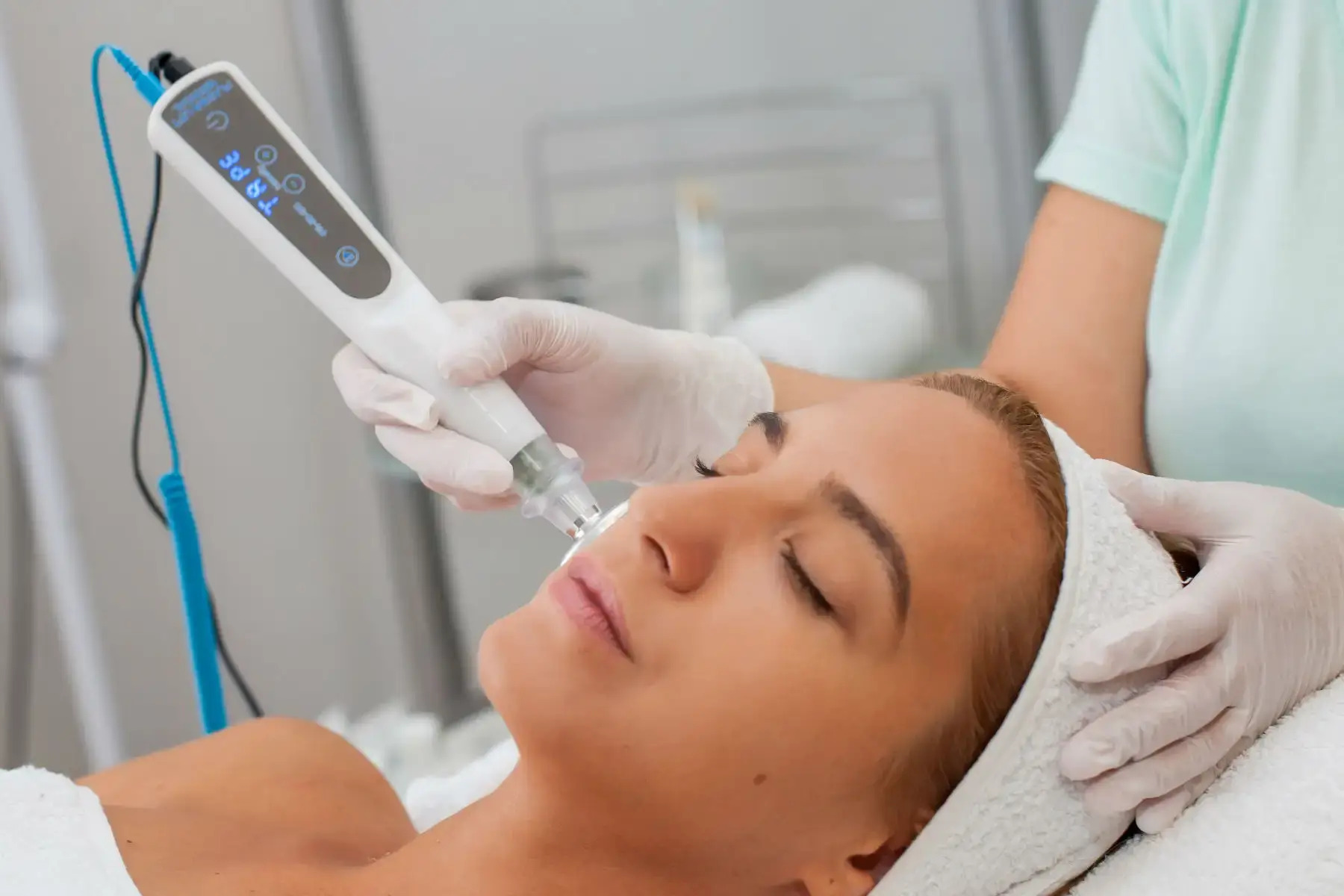
Three keys: a non-contact electric arc that sublimates the lesion point by point, precise targeting to protect nearby tissues, and natural healing with a protective scab that forms and falls away on its own.
The JETT tip generates an electric arc that ionizes the air between the device and the skin. This arc sublimates the lesion point by point.
The arc acts on a very small area, allowing the lesion to be removed without damaging the surrounding skin. Suitable for the delicate eyelid area.
After the session, the body naturally forms a scab that protects the area while it heals. It falls off on its own in 7 to 14 days.


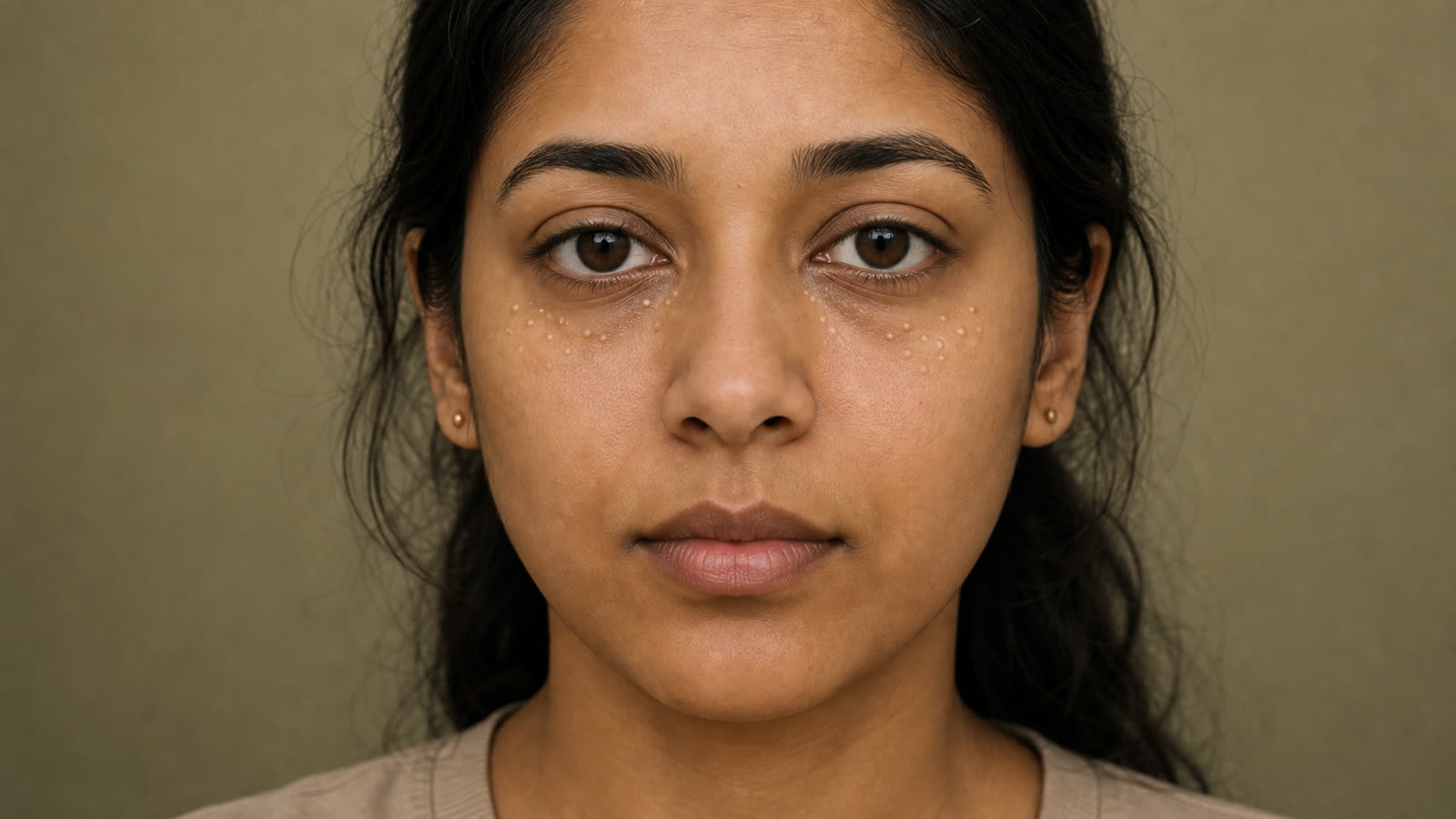
Several types of benign eyelid skin lesions that may benefit from non-surgical removal. The physician will determine whether this applies to your individual case.
Xanthelasma — yellow plaques on the eyelid, often at the inner corner, that do not go away on their own.
Skin tags — small stalked skin growths at the edge or base of the eyelids.
Milia — small white spots under the skin around the eyes, sometimes appearing in clusters.
Several benign lesions to be removed in a single session on one or both eyelids.
Patients who wish to avoid traditional surgery with incisions and stitches.
JETT Plasma works by using an electrical current to sublimate the skin. Certain situations can make you ineligible for this treatment. Our team reviews these factors systematically before your session.
Pacemaker, defibrillator, or any implanted electronic device that could be affected by electrical current.
Active herpes on or near the eyelid — risk of reactivation; should be treated before the session.
Accutane or Roaccutane taken in the last 6 months — wait until the required period has passed before treatment.
Dark skin — higher risk of lighter or darker spots; discuss in detail beforehand.
Known tendency to keloid or hypertrophic scars.
Three main steps: evaluation and numbing, sublimation, and natural healing.
Lesion examination (size, appearance, location) and confirmation it is benign. Anesthetic cream 30 to 60 min beforehand. Small injection possible for larger lesions.
The practitioner applies the JETT tip above the skin, without contact. An electric arc sublimes the lesion point by point. Clicking sound and a slight smoky odor are normal.
Small dark brown dots on the treated area. You can leave immediately. A scab forms and falls off naturally within 7-14 days. No makeup before it falls off, and SPF 50+ sun protection for 4-8 weeks.
THE CARE EXPERIENCE

Family doctor and graduate of the Université de Montréal, in good standing with the Collège des médecins du Québec (CMQ), Dr. Karen Dzolang serves as medical director for the CARE network. For eyelid lesions and skin plaques near the eye, she helps frame the evaluation, possible indications, treatment limits and situations where another medical opinion is preferable.